
Bridging cultures and building connections with Professional Language Services in the US.
Effective communication is now essential to the success of organizations all across the United States in a society that is becoming more diverse and globalized. Professional language services are becoming more and more in demand in the U.S., from corporations and public service providers to healthcare facilities and legal organizations.
Professional translation and interpretation are now necessary tools for accuracy, compliance, and trust, as I have witnessed firsthand when working closely with language service workflows.
The language services of professionals are paramount due to the fact that there are several million in the U.S. who do not speak English, and whose language is therefore important to include and communicate effectively.
The Growing Importance of Professional Language Services in the US
A Multilingual Population with Diverse Needs
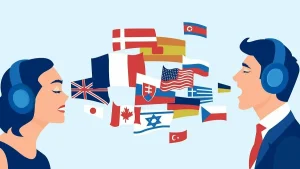
The USA is one of the most linguistically diverse countries. Its residents speak Spanish, Arabic, Mandarin, Urdu, ASL, and numerous other languages and communicate with any business and institution on a regular basis.
In the U.S., professional language services assist the following organizations:
-
Clearly communicate with a variety of communities
-
Prevent miscommunications brought on by language barriers
-
Provide fair access to services
Failure to engage professionals in the process suggests that businesses are prone to misunderstandings that may be detrimental to their image and even have legal implications.
Compliance and Regulatory Requirements
Language access to individuals with limited engagement in English (LEP) is a provision of federal and state laws in the domains of healthcare and law.
Some of the requirements that businesses are required to fulfill are achieved with the assistance of skilled translators and interpreters who act with discretion and precision.
Major Industries That Depend on Professional Language Services
Healthcare and Medical Communication
Effective communication in the healthcare field can mean life or death. Necessary interpretation in U.S. hospitals, clinics, and telemedicine providers is crucial in providing patients with an understanding of their diagnoses, treatments, and care plans.
Professional medical language services, in my opinion:
-
Boost patient outcomes and safety
-
Cut down on medical mistakes
-
Build trust between providers and patients
Automated tools cannot consistently handle complex language and delicate interactions; professional medical interpreters are trained to do so.
Legal and Judicial Services
The judicial system in the United States demands clear and objective communication. Legal interpretation and certified translation services support:
-
Court proceedings
-
Hearings and depositions
-
Legal documents and contracts
Here, accuracy is crucial. Professional language services are essential in this field because even a minor translation error can change the meaning and affect legal consequences.
Corporate and Business Communication
U.S.-based companies that work either locally or internationally should be able to maintain brand consistency but adapt to numerous languages.
Multilingual translation benefits businesses in that it enables:
-
Localizing advertising materials and websites
-
Translating training materials and internal documents
-
Encouraging international collaborations
Expert translation guarantees that messages are consistent with brand values and suitable for the target culture.
The Role of Technology in Modern Language Services
Video Remote Interpretation (VRI)
Video Remote Interpretation (VRI) has become an essential solution in the U.S. as remote work and virtual services grow. Through secure video platforms, VRI enables organizations to rapidly access trained interpreters.
VRI is frequently utilized for:
-
Consultations for healthcare
-
Public organizations and social services
-
HR conversations and corporate meetings
This method combines accuracy and quickness, particularly in situations where in-person interpretation is not practical.
Supporting Accessibility with Sign Language Services
In the U.S., inclusivity is becoming more and more important. Effective communication with deaf and hard-of-hearing individuals is ensured by sign language services, such as American Sign Language (ASL) interpretation.
Interpreting sign language:
-
Improves compliance and accessibility
-
Enhances the experience for patients and customers
-
Demonstrates a dedication to justice and inclusion
Common Challenges Without Professional Language Services
Excessive Use of Machine Translation
In spite of the convenience of machine translation systems, they usually lack precision, cultural awareness, and context, particularly in sensitive or technical contexts.
I have also witnessed instances of automated translations that resulted in misunderstandings or very expensive revisions in the future.
Employing Untrained Bilingual Employees
Relying on bilingual staff members without professional interpretation training is another frequent error. This can result in errors, omissions, and moral dilemmas, especially in the legal and medical fields.
Organizations can reduce these risks by using professional language services.
How Expert Language Services Increase Trust, Engagement, and Create Long-Term Value
Positive engagement is more frequent when people feel understood in their own language.
In the U.S., professional language services assist businesses in establishing trust and enduring connections with a variety of audiences.
Cost Savings and Operational Efficiency
Professional language services reduce expenses over time by reducing miscommunication and increasing productivity.
An Edge Over Competitors
Businesses that put a high priority on language access are better able to:
-
Reach a wider audience
-
Cater to diverse markets
-
Confidently meet regulatory requirements
Conclusion
Professional language services in the US are a strategic need rather than a luxury in the diversified and regulated environment of today’s United States.
Professional translation and interpretation guarantee inclusivity, clarity, and compliance in a variety of contexts from corporate and public services to healthcare and legal situations.
Ready to meet the growing demand? Partner with us for top professional language services in the United States. Get your free quote today and secure your global edge!
FAQs
What services are offered by United Language Solutions?
USL offers complete language services that include translation, remote and on-site interpretation, localization, transcription, and multimedia solutions in more than 200 languages. They cover legal, medical, and technology industries, with a focus on certified accuracy in global compliance.
Why is the demand for patent translation growing in the US?
Having over 600,000 patent applications annually, companies require accurate translations in 120 languages to enable them to obtain international protection, particularly in technology and pharmaceuticals. The worldwide pressures that come with globalization compel firms to expand in Europe and Asia, increasing the demand for certified translation services in patents.
How do legal translation services ensure US compliance?
Certified translators are guided by the NAJIT or ATA standards, dealing with notarized documents, court submissions, and contracts. Such standards and proper certification can prevent rejections in federal courts, and the need is growing due to an increment of litigation interpreter hours approximately 30%.